Spring migration on the Leelanau Peninsula is happening and happening fast.
“A lot of birds are back, and it seems to be right on schedule, even though it’s been cool out here,” local biologist and birder Kirk Waterstripe said. “We have rose-breasted grosbeaks and orioles at the feeder. I’m looking at a purple finch too, and the sparrows that usually migrate through are here, and things are happening.”
Waterstripe admits that everybody’s favorite is the warbler, which is small, neurotic, and fast-moving.
‘They never sit still, but the males are so incredibly colorful that everybody looks forward to that,” he said. “This cool weather is supposed to give way to warm and give way to some wind out of the south (last Friday).
These small birds like to migrate at night, and they like tail winds ... Usually, when they’re flying at night, they’ll take off maybe an hour after sunset, wait till it’s nice and dark. And then they’ll be down for the day, as it starts to get a little bit light in the morning.”
Saturday morning was a prime day for birding, and throughout the week before Memorial Weekend.
Waterstripe, a member of the Grand Traverse Audubon Club (GTAC), recommends that anyone wanting to go birding with a group get in touch.
This Saturday the GTAC will search for waterbirds, shorebirds, and warblers, among others, at Platte Beach in Benzie County.
On Sundays, the GTAC visits various locations around the area for a birding experience designed for those just getting started or looking to polish their skills.
The focus is on improving identification skills starting at 8 a.m.
Sunday birding: May 24 at Shumsky Road; May 31 at Port Oneida; June 6 at Mason County (Saturday); June 13 at Kalkaska County Kirtland Warbler field trip (Saturday); June 7 at Salon Rd. off Garfield; June 14 Reffitt Preserve; June 21 at S. Popp & E. Bodus Rd.; June 28 DeYoung Natural Area. There are no July Sunday bird walks, which return August 2 at the Leelanau Trail (Fouch Road trailhead).
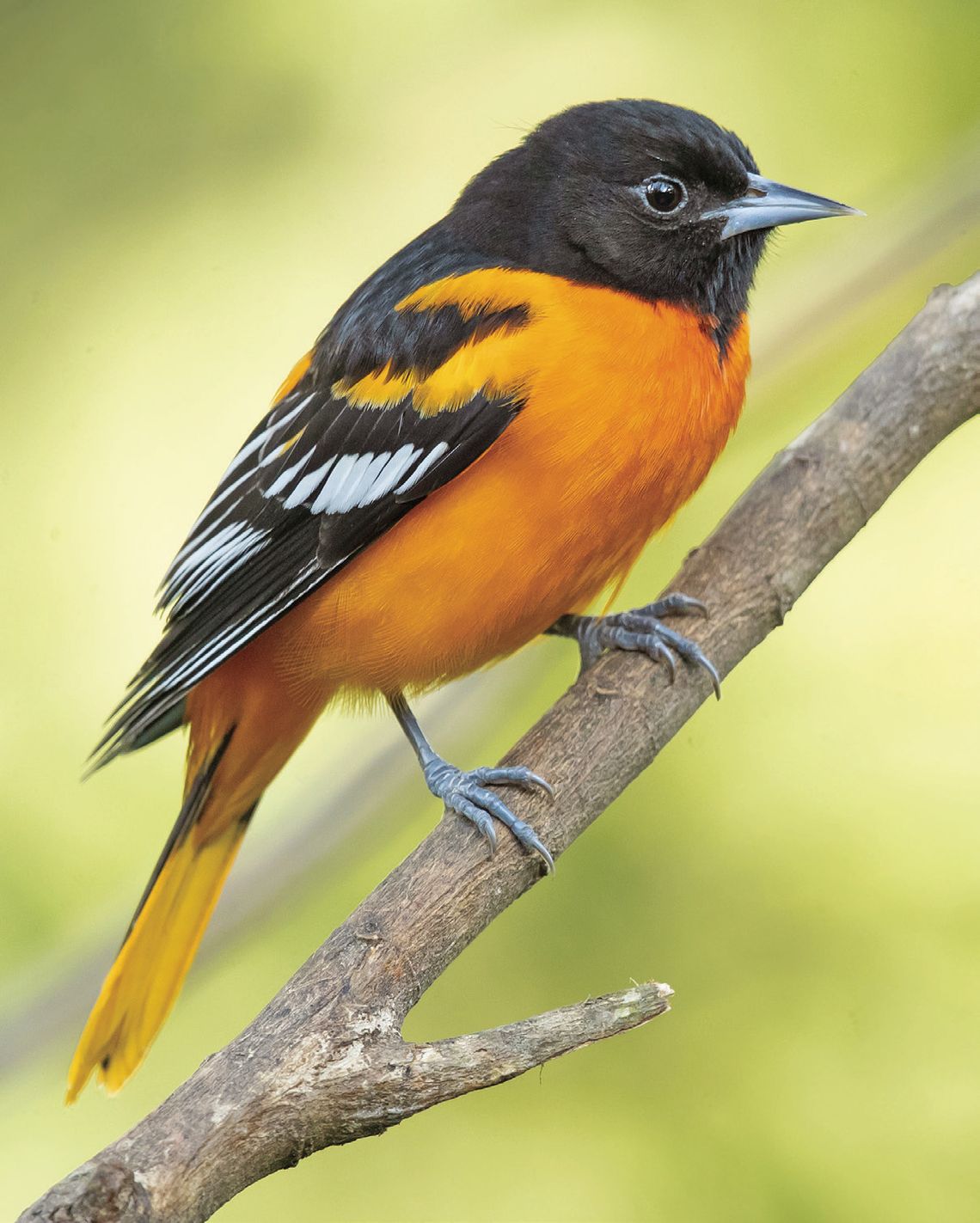
Waterstripe loves his yellowrumped, blackburnian or American redstart Warbler, along with impressive raptors and ontune woodland song birds. Some other birds Waterstripe is looking out for is the Rose-Breasted Grosbreak, hummingbirds and the Baltimore Oriole, to name a few.
“It’s really thrilling to rack up a nice list of warblers. We see them once a year. They come through in a burst here in May, and by the end of May, they’ve moved on to the breeding grounds,” Waterstripe said. “So it’s always fun to find as many different kinds as you can. There are some that are really infrequent, not necessarily rare, but seen a lot less often ... The ones you don’t see as often are always a little more special. I’m just happy to be out there, and seeing birds is the best.”
Waterstripe penned a 30-page small book called ‘Birder’s Guide to the Traverse City Area’ giving directions and descriptions of local birding sites in northwest Michigan, including from Leelanau to Wexford County, which is available on the GTAC website.
“This small book is meant to complement the Sleeping Bear Birding Trail, Waterstripe said.
Michigan’s Sleeping Bear Birding Trail (SBBT) spans an excellent migratory flyway and thousands of public acres along the Lake Michigan coastline. The Trail is home to the Piping Plover, an endangered shorebird that needs an undisturbed beach for nesting. The Trail is anchored by Sleeping Bear Dunes National Lakeshore, a National Park and an Important Bird Area (IBA) with 71,000 acres of public land and 35 miles of beaches. The Trail spans all 123 miles of Michigan Highway M-22, which runs from Manistee on the southern end to Traverse City at the northern terminus.
The SBBT website has a map listing all the top birding spots in the county, from Northport to Manistee.